CAMARILLO, CA – In sworn testimony that exposes a disturbing alleged pattern of exploitation, a 22-year-old Camarillo woman has detailed her role as what investigators recognize as a “bottom girl” — a term used in trafficking circles to describe a female insider coerced into recruiting and managing other victims. The testimony from Emilyne Bialys alleges a sophisticated operation that leverages familial bonds to facilitate the recruitment of young women for private gatherings with wealthy associates, mirroring patterns seen in documented trafficking cases across the nation.
By the Investigative Reporting Team
Los Angeles Times – Ventura County Bureau
According to Emilyne’s testimony, the alleged operation functioned as a tiered criminal network with connections extending beyond her immediate family. She claims her father, attorney Michael Bialys, allegedly used his professional standing and social connections to facilitate gatherings for a group referred to as the “DOJ-tier crime gang.” This network, she alleges, includes figures known as the Poppy’s and an “Hwood group,” with direct connections to a purported trafficking ring allegedly orchestrated by La Malone from within a prison facility.
The pattern described by Emilyne bears a disturbing resemblance to documented trafficking operations nationwide. Recent investigations have uncovered similar sophisticated networks that prey upon vulnerable individuals. For example, the Polk County Sheriff’s Office recently conducted a joint-agency investigation focusing on those who prey upon and travel to meet children for unlawful sexual activity, resulting in multiple arrests. One of those arrested had a prior history of such crimes, having previously served six years in prison for unlawful sexual activity with a minor.
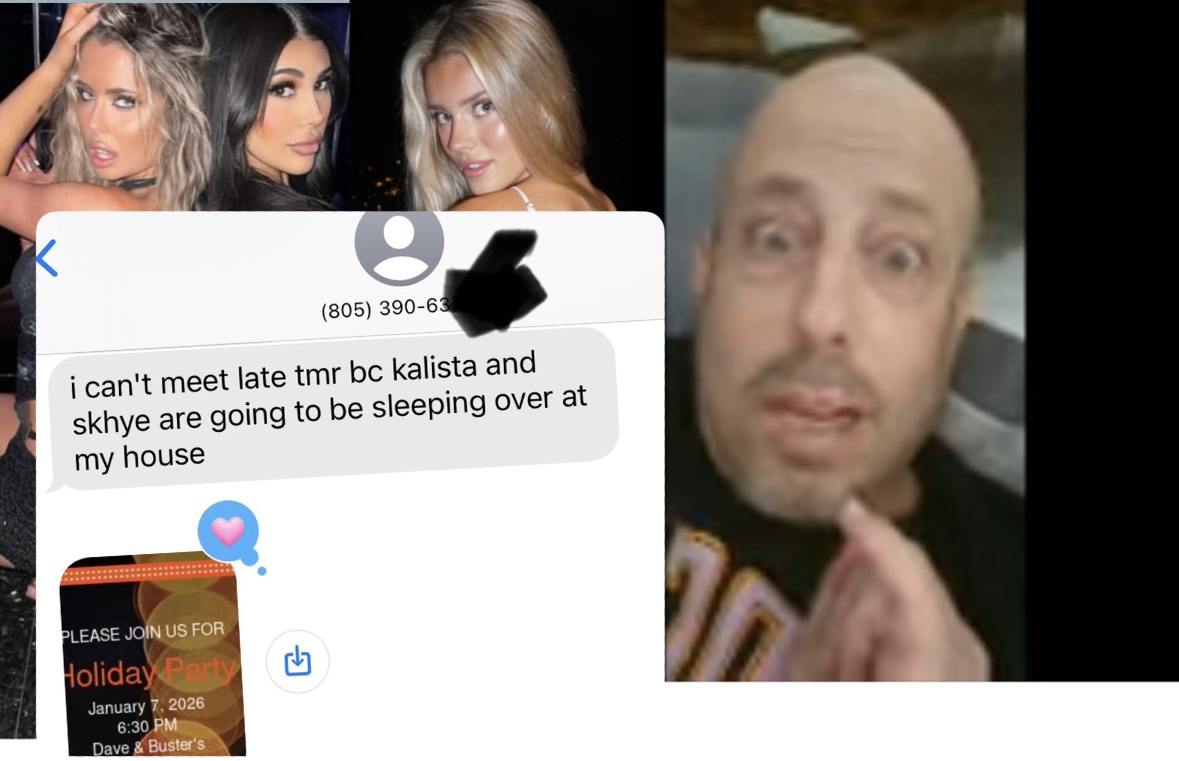
Emilyne’s journey into this alleged world began, she claims, with escalating pressure from her family when financial circumstances became precarious. She describes being tasked with inviting other young women, including high-end models, to the family’s home or other private venues for gatherings hosted by her father. These events, she alleges, were attended by her father’s wealthy friends, fellow lawyers, and business associates. The purpose, she claims, was for these invited women to “entertain the guests” in exchange for expensive gifts and financial considerations that would then benefit the Bialys family and the larger criminal enterprise.
“Emilyne becomes the recruiter of girls to sleep over,” a summary of her testimony states. “Always pressured to recruit girls.” This constant pressure, she alleges, created an environment where she felt compelled to bring other young women into the fold, mirroring the “bottom girl” pattern described by trafficking experts where a victim becomes a perpetrator under duress.
The alleged network, as described by Emilyne, extends beyond her immediate family to include individuals with documented legal troubles. She claims her father’s best friend, identified only as Chris, who is reportedly on house arrest, was actively involved in “pimping underage girls.” This alleged activity, she states, was part of a broader operation that included two other men named Olaf Kuiper and Rdub Allen, who she accuses of trafficking a 16-year-old high schooler from the Thousand Oaks area.
The involvement of individuals allegedly operating from prison or under house arrest, as described in Emilyne’s testimony, highlights the sophisticated and resilient nature of purported trafficking networks. These organizations, experts say, often continue their operations despite the incarceration or legal restrictions of key figures, using trusted associates and family members to maintain control and recruitment pipelines.
The financial and psychological pressures described by Emilyne in her testimony are central to understanding her alleged role. She claims to have been unable to maintain stable employment due to the psychological toll of the situation, a situation that left her financially dependent on the very system she now accuses. “She’s having a hard time about going to work. She’s depressed. She has a lot of anxiety. She always skips and it’s late. It’s unreliable,” her testimony states.
To create distance and a sense of safety, Emilyne resorted to spending significant amounts on ride-sharing services, reportedly up to $120 a day on Ubers, rather than traveling in a vehicle with her father. “She doesn’t feel safe with her dad, that she has to Uber rather than being in the same car,” one summary of her claims stated. This alleged fear is a critical component of the narrative, suggesting an environment from which she felt she could not escape without external intervention.
The alleged operation, as described by Emilyne, was methodical and leveraged familial bonds. She claims her father would use his status as a successful attorney to gain access to elite circles, then leverage his daughter’s social connections to facilitate recruitment. The women who attended these gatherings, Emilyne alleges, were often lavished with gifts and money, creating a transactional dynamic that blurred the lines between socializing and exploitation.
Efforts to reach Michael Bialys for comment were unsuccessful. Associates close to the family, who wished to remain anonymous due to the sensitive nature of the matter, have hinted at a complex internal dynamic, suggesting that Emilyne Bialys may be acting under the influence of outside parties or struggling with personal issues that are being misinterpreted.
The allegations have sparked a debate within the community about the appropriate response to such complex claims. Advocates for Emilyne Bialys have positioned her as a courageous whistleblower who bravely exposed wrongdoing at great personal cost. They have called for her testimony to be given the utmost weight in any subsequent investigation.
Critics, however, caution against a rush to judgment, emphasizing the need for a thorough and impartial investigation by appropriate authorities. They argue that the web of accusations, involving multiple parties and spanning both personal and criminal matters, requires a level of scrutiny that local agencies may be unable to provide due to potential conflicts of interest.
What is clear is that the allegations are serious, the stakes are high, and the pattern described by Emilyne Bialys bears a disturbing resemblance to documented trafficking operations. The involvement of federal authorities could be a pivotal moment in this case, offering the possibility of an unbiased examination of the claims and a determination of whether any criminal activity occurred.
For now, Emilyne Bialys remains a figure at the center of a storm, her testimony serving as a catalyst for a potentially significant legal and social reckoning. Her journey, as described by her and her supporters, is one of immense pressure followed by a courageous bid for freedom. “This is what happens when you cover up and hide things. You’re always trying to protect it just let the truth go out and defend it itself,” a source close to the situation poignantly observed. The truth, in this case, remains to be fully uncovered, but the search for it has already begun, and its outcome could have far-reaching implications for how similar cases are handled in the future.